Bedroom Color Ideas: 14 Shades You’ll Love Waking Up To
Have you ever stood in a paint store, looking at dozens of shades of white and gray, but they all seem almost the same. Then you bring a sample home, try it on your wall and notice it looks completely different.
Choosing the right bedroom color can be tricky. After all, your bedroom is where you start and end each day. The right color can make a small room feel more open, a dark space feel warm and a simple bedroom look more beautiful.
In this guide, you’ll find 14 bedroom color ideas for walls, bedding and decor. You’ll also learn some easy tips about lighting, color undertones, and shades that look good together. Save your favorite ideas to your Pinterest bedroom board so you can easily find them when you’re ready to choose a paint color.
How to Choose Bedroom Colors Before You Pick Up a Paintbrush
A great color on a screen can turn out very differently in your own room. A few quick checks will save you time, money and a lot of repainting.
Check Your Natural Light First
The amount and direction of light in your room changes how every color looks, and it’s one of the most common mistakes people make when picking a bedroom shade. Rooms with plenty of natural light can handle darker colors more easily, which often creates a cozy, intimate feeling. A north-facing room with weaker light usually feels best in warm, slightly lighter tones that won’t turn muddy or gloomy.
Look at the Undertone, Not Just the Color
Every color has a hidden undertone, such as warm, cool, pink, yellow or green. Two beiges can look completely different next to each other because of it. For white walls especially, it helps to choose one with a subtle undertone rather than stark white. One designer recommends a white with an undertone to add a little character to a bedroom.
Test Large Samples at Different Times of Day
Tiny paper swatches lie. Paint a sample at least a couple of feet wide on two different walls, or use peel-and-stick sample boards from brands like Sherwin-Williams, and look at it in the morning, afternoon and evening. Check it next to your bedding, your floor and your curtains, because those are the colors it will actually live with.
Calming Bedroom Color Ideas for Rest and Sleep
If your main goal is a peaceful room that helps you unwind, start here. These four shades are the classics for good reason.
1. Soft Blue for a Restful, Airy Feel

Blue is the color people turn to when they want calm. Sleep experts and designers alike tend to rank blue among the best bedroom color ideas for its soothing effect. Choose a soft, slightly grayed blue like a misty sky or a dusty powder shade, rather than a bright primary blue.
Pair it with crisp white cotton bedding, natural wood and a touch of brass or linen to keep it from feeling cold. If your room faces north, pick a blue with a hint of warmth in it, so it doesn’t look icy in the winter months.
2. Sage Green for a Natural Sanctuary
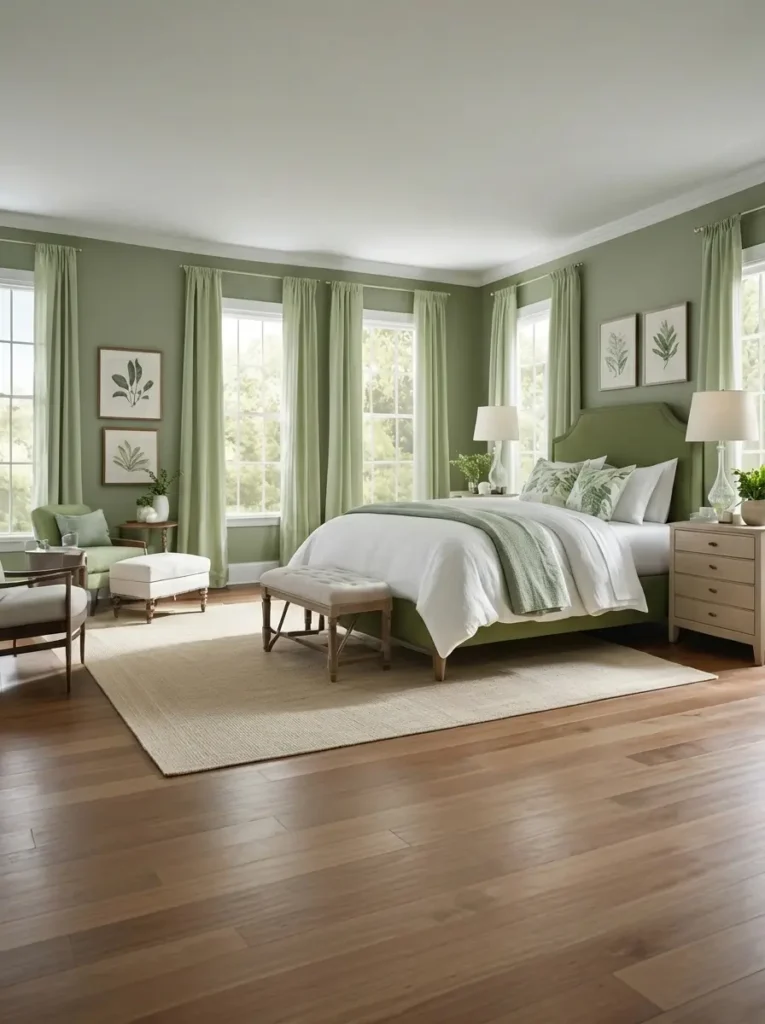
Sage green brings the outdoors in without any effort. It sits between gray and green, which makes it quiet enough for a bedroom and interesting enough that the room doesn’t feel flat. It also works beautifully with almost every wood tone.
Layer it with cream bedding, a woven rattan piece and a few plants for a relaxed, grounded look. It’s one of the easiest shades to live with, because it stays calm in both bright and dim light.
3. Warm Off-White for Bright, Gentle Walls
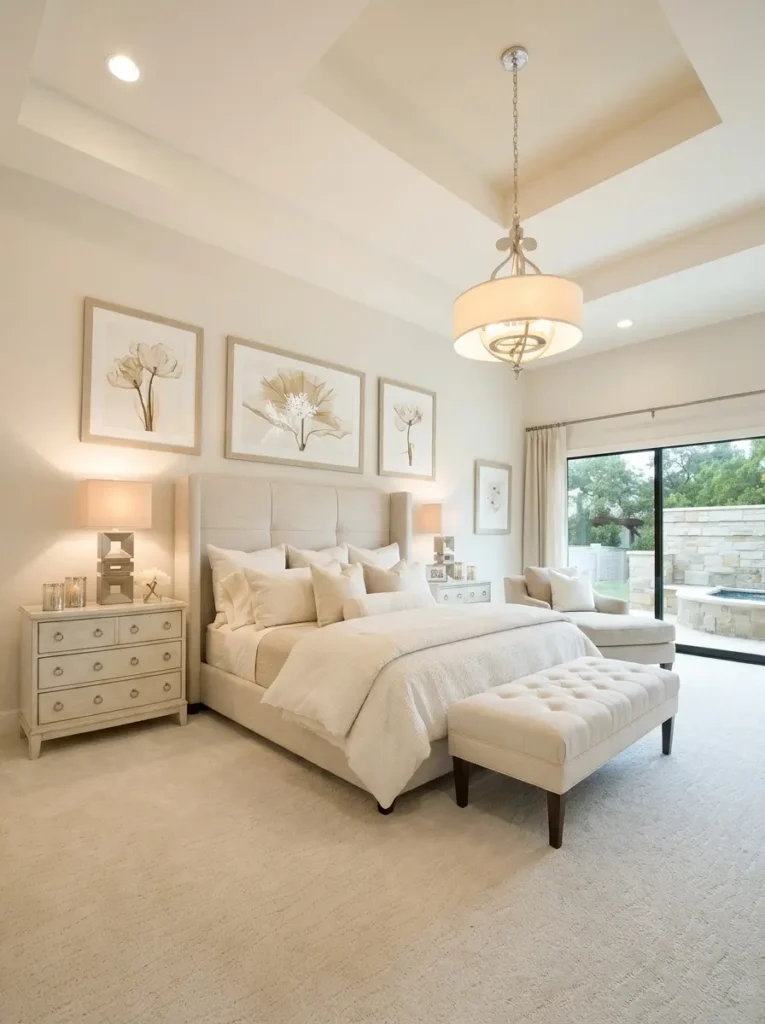
A warm off-white isn’t plain, it’s the quiet backdrop that lets your bedding, textures and art shine. Pick a white with a creamy, slightly yellow or soft pink undertone instead of a stark, bluish white, which can feel clinical in a bedroom.
White and off-white also reflect light, which helps small or dim rooms feel larger. Add depth with layered textures like linen, wool and wood so the room doesn’t feel flat. If your room is tight on space, our guide to small bedroom ideas shows how light walls and smart layouts work together.
4. Pearl Gray With a Warm Undertone

Gray can look elegant, but the wrong gray can look flat and gloomy. On cloudy mornings, a cold gray can feel dull and hard to connect with, according to one design commentator. The fix is to choose a pearl or greige gray with a warm undertone so it feels soft rather than steely.
Pair it with warm wood, cream linen and one soft accent, such as dusty rose or muted green. Add warm lighting around 2700K to keep the walls glowing in the evening.
Warm and Cozy Bedroom Paint Color Ideas
If you want your room to feel like a hug, look to earthy, sun-baked shades. These are some of the best bedroom paint color ideas for creating a cocoon.
5. Terracotta for a Sunset Glow

Terracotta wraps a bedroom in a warm, golden feel, like a permanent sunset. A pale, dusty terracotta works especially well, because it adds warmth without overwhelming the room.
Use it on one wall behind the bed or even on all four walls in a larger room. Pair it with linen, sand-colored bedding and natural wood, and avoid too many matching accessories so the color doesn’t feel too heavy. For more earthy, handmade touches, take a look at our guide to wabi sabi decor.
6. Taupe for Velvety Neutrality
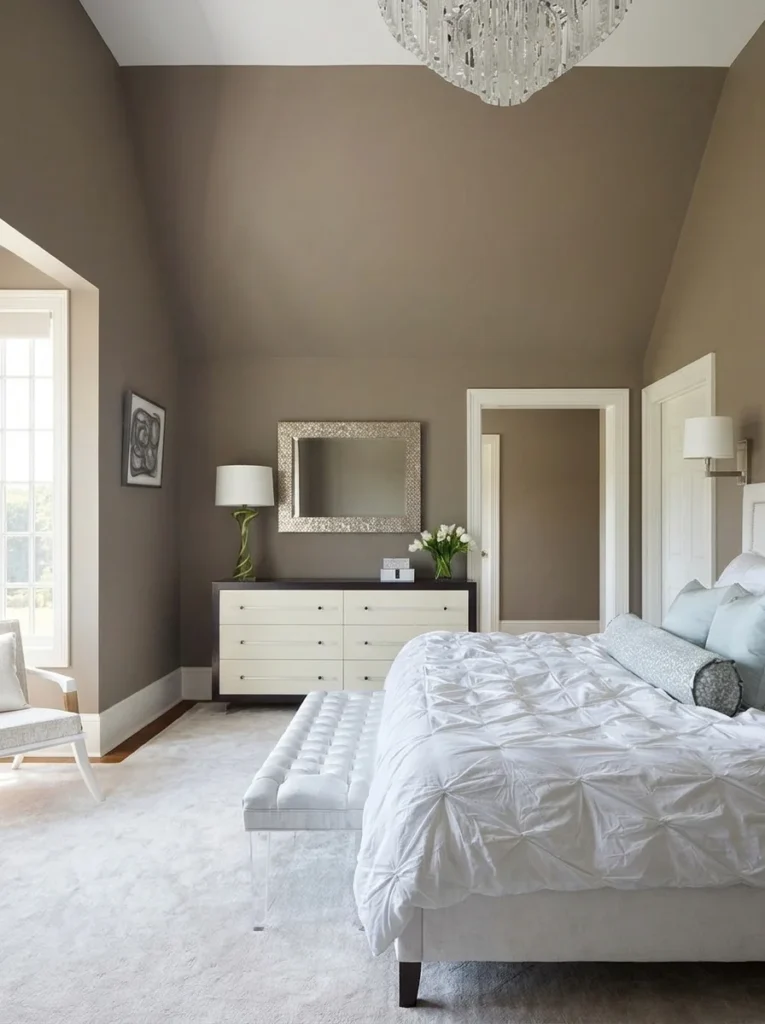
Taupe is the sweet spot between gray and brown, soft, sophisticated and endlessly easy to decorate around. A taupe with warm undertones feels much cozier than a cool gray and less sleepy than plain beige.
It looks lovely with cream bedding, sage cushions and brass accents. Because it’s neutral, it works as a calm backdrop for almost any style, from classic to modern.
7. Deep Beige and Sand for Gentle Warmth

Beige has a reputation for being boring, but a rich, deep beige or sand shade feels warm and layered. The trick is to mix several tones of beige in the same room, such as a taupe-beige wall, sandy textiles and rosy-beige accessories.
Add contrast with a few matte black details like frames or a lamp base so the room doesn’t blur together. Natural materials like wool, ceramic and linen finish the look beautifully.
8. Dusty Pink for a Soft, Grown-Up Look
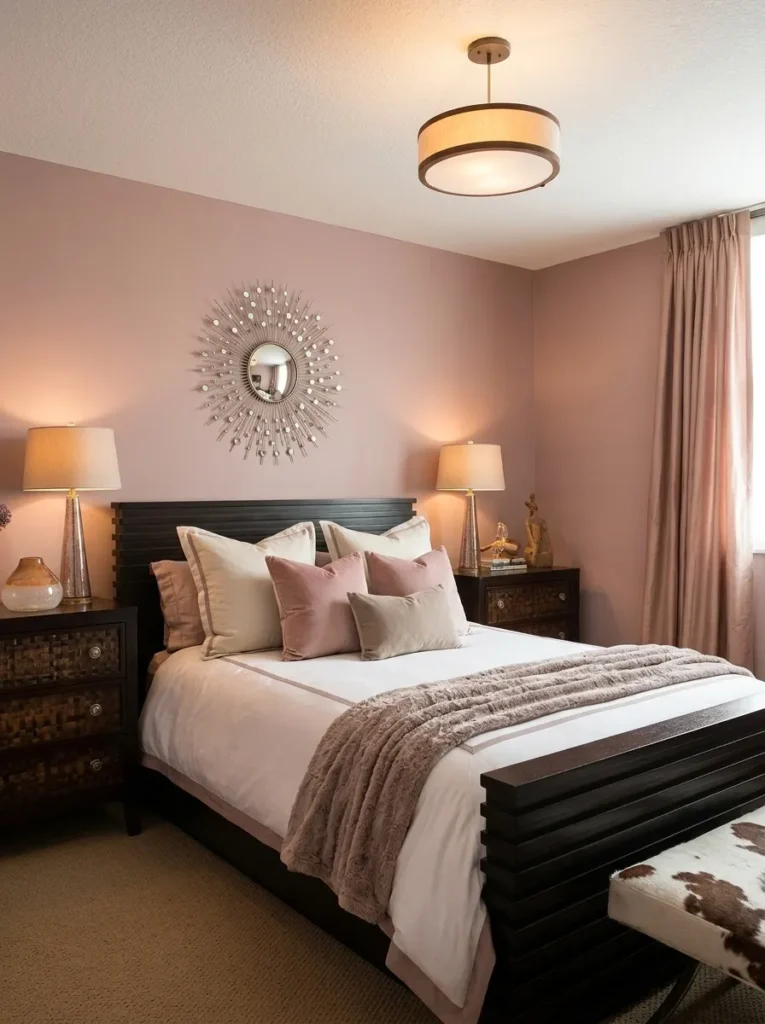
Pink in a bedroom doesn’t have to look childish. A muted, slightly grayed dusty pink feels sophisticated, warm and gently romantic, especially when paired with grown up materials like linen, brass and dark wood.
Choose a shade that leans toward clay or sand rather than bubblegum, and balance it with charcoal, olive or deep brown accents so it feels refined.
9. Subtle Mauve for a Quiet Romantic Touch
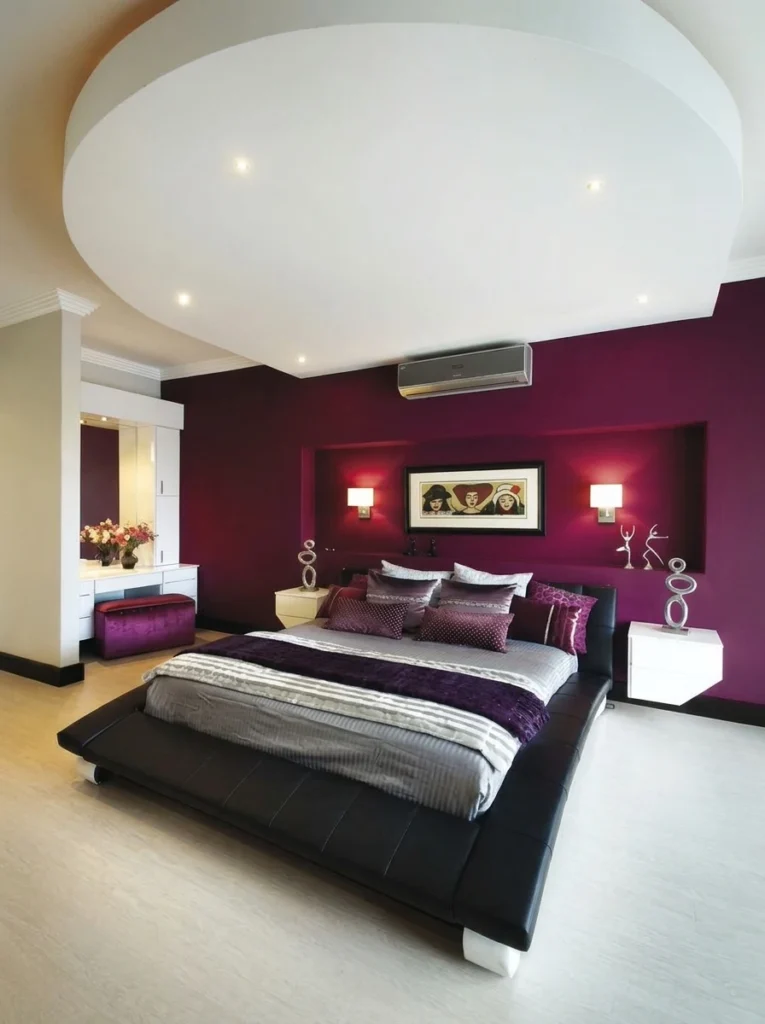
A grayed mauve or soft lilac adds a hint of romance without turning loud. It’s a lovely alternative to pink, especially if you want something a bit different but still calm.
Keep it dusty and muted, never bright, and pair it with cream, beige and a touch of gold. Velvet cushions and a soft glow from a lamp bring out its depth in the evening.
Bold and Moody Bedroom Wall Color Ideas
Dark colors can feel incredibly cozy when used well. If you love a dramatic, cocooning room, these are the shades to try.
10. Burgundy for Rich, Velvet-Like Depth
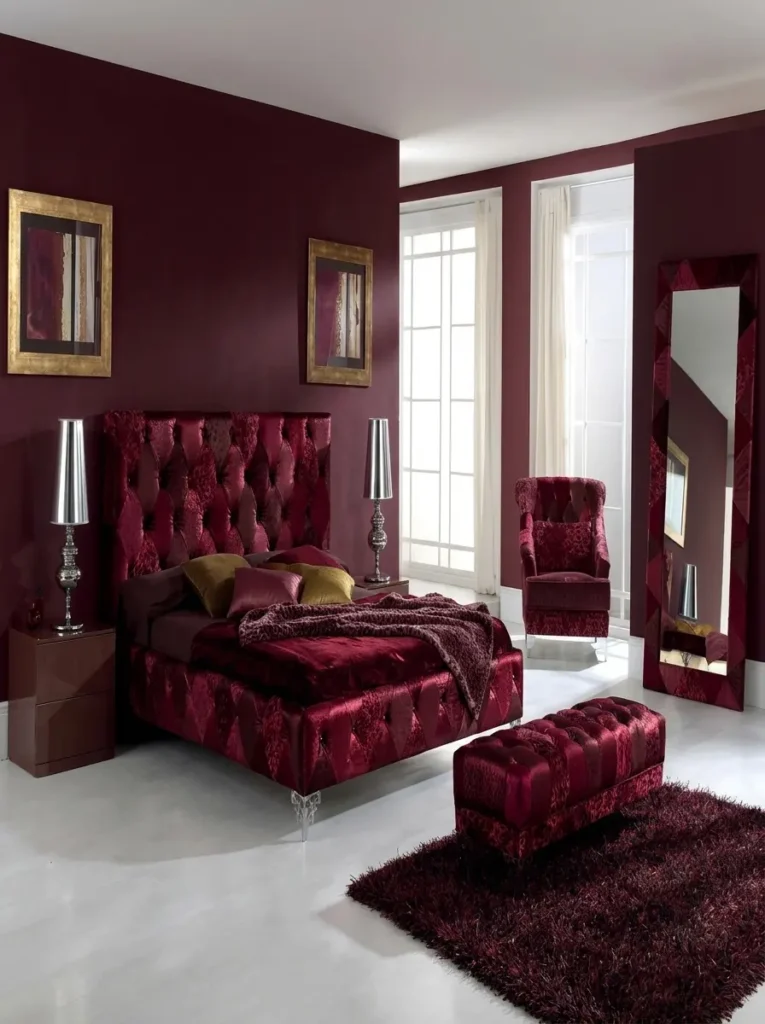
Burgundy surrounds you with depth and warmth, ideal for a bedroom you mostly use in the evening. Use it on one wall or on the bedding and curtains if you prefer a softer approach. Keep in mind that a very strong red can be too stimulating for rest, so go for a deep, brownish burgundy instead of a bright red.
Balance it with cream linen, brass details and warm lighting. A thick wool rug and a deep-toned throw complete the cozy, autumnal feel.
11. Deep Forest Green for a Cocoon Effect
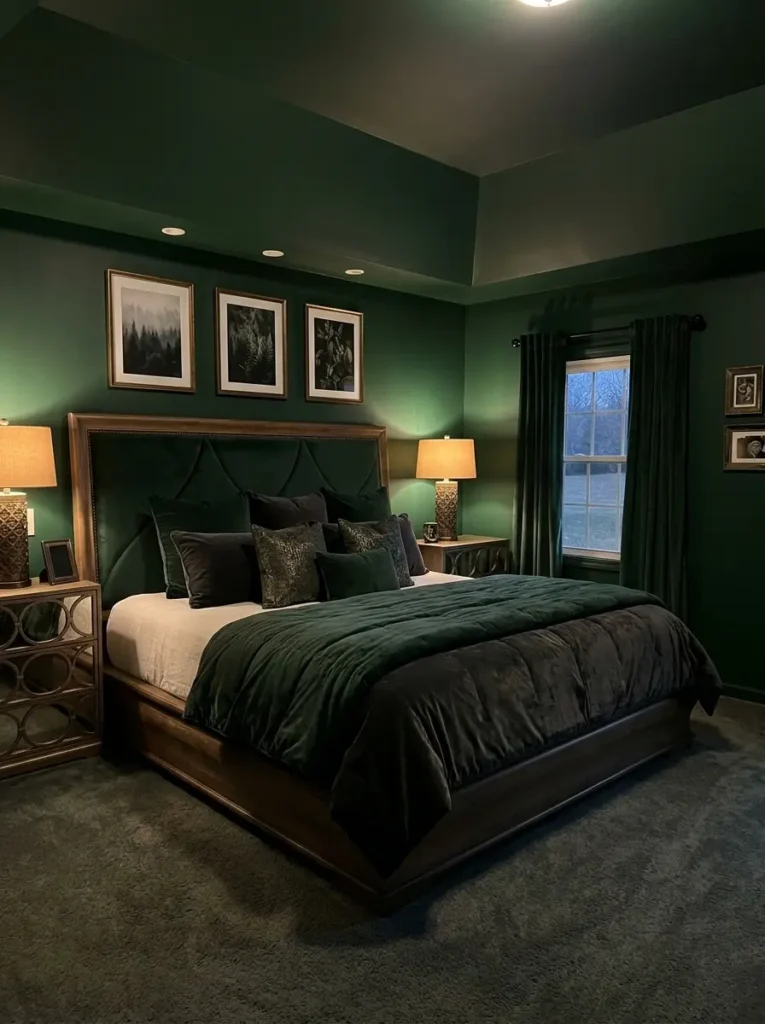
A dark, muted forest or bottle green turns a bedroom into a cocoon, like a quiet wood at dusk. It’s especially stunning in rooms with good natural light, where the color shifts beautifully through the day.
Pair it with warm wood, cream bedding and a little brass or copper. Matte paint keeps it looking soft and rich rather than shiny and harsh.
12. Navy or Midnight Blue for Quiet Drama
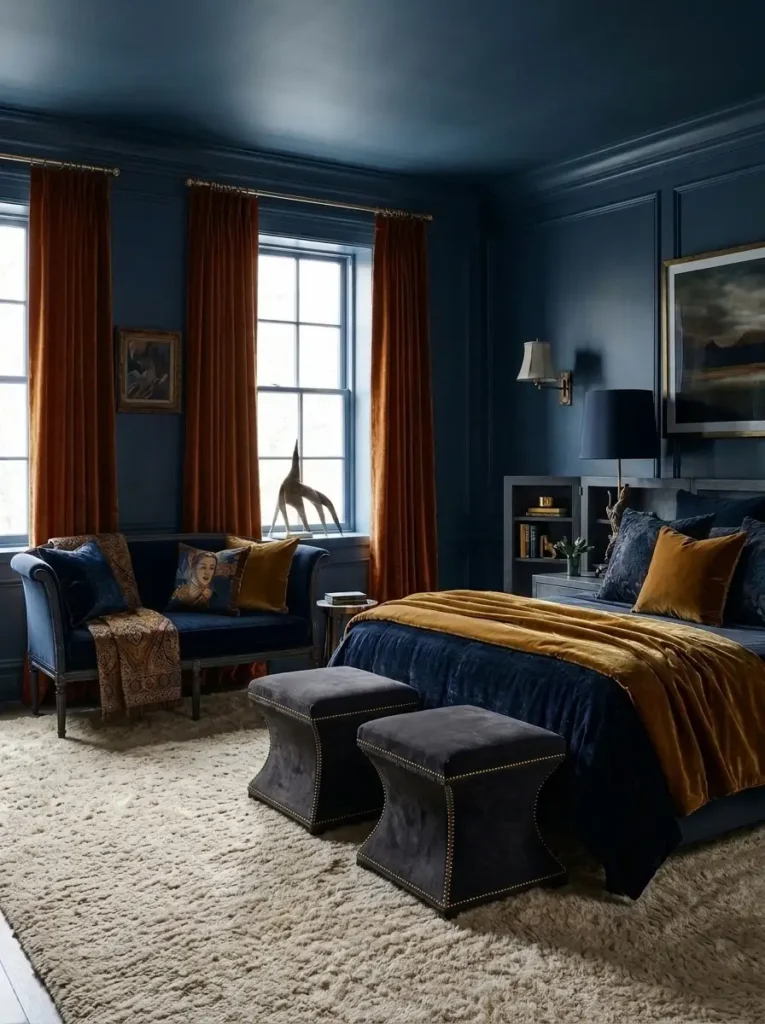
Where soft blue is airy, navy is dramatic and enveloping. It makes a bedroom feel like a cozy night sky, particularly when paired with crisp white and warm wood. It’s also a good choice for a larger room or for an accent wall behind the bed.
If you’re unsure, start with an accent wall. Deep colors tend to work well on accent walls or in larger spaces, where they create a cozy mood. Soft lighting and plenty of texture keep it from feeling heavy.
Master Bedroom Color Ideas and Bedroom Wall Color Ideas
These last two ideas are about how you apply color, rather than which color you choose. Both work in any room, but they’re particularly nice in a larger primary suite.
13. Master Bedroom Color Ideas: Tone-on-Tone Layers

For a master bedroom that feels calm and polished, choose one color family and use several shades of it. Think a soft greige wall, a deeper taupe headboard and light sand bedding. The tone-on-tone effect looks expensive and keeps the room restful, without any harsh contrast.
Add interest with texture instead of color: bouclé, velvet, linen and wool all create depth. If you’d like more ways to style a larger room, see our bedroom decor ideas for sitting areas and statement art.
14. Bedroom Wall Color Ideas: A Painted Accent Wall Behind the Bed

If you’re nervous about committing to a strong color, paint just the wall behind the bed. It frames the bed as the focal point of the room and gives the space instant personality, while the other walls stay light and calm.
Choose an accent that complements your bedding, like deep green with cream, or terracotta with sand. Extend the color slightly past the bed on both sides for a more intentional look.
Bedroom Colors to Be Careful With
There are no strict rules, but a few shades are trickier to live with in a room meant for rest.
Neon and Very Bright Shades
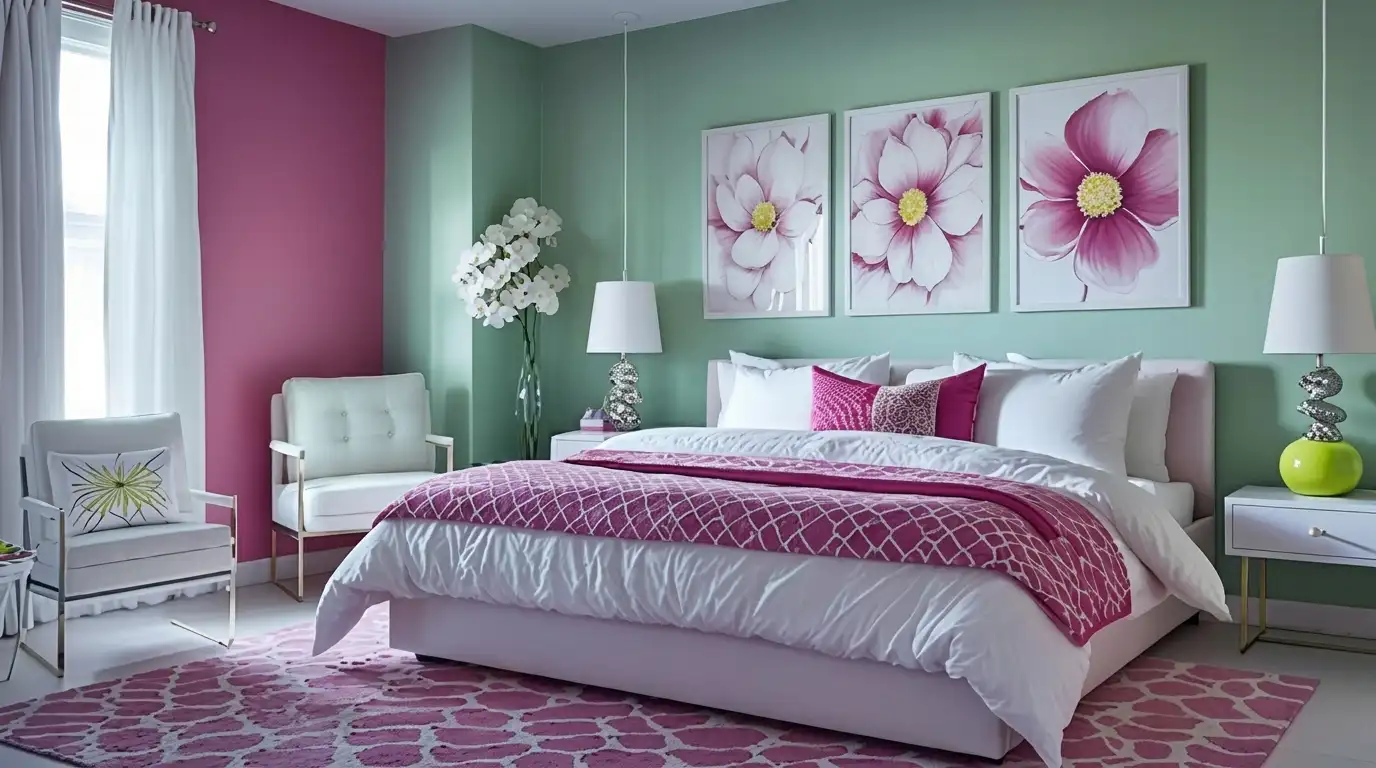
Overly bright or neon colors can make it harder to fall asleep. If you love vivid color, keep it to small accents like a cushion or a piece of art rather than covering the walls.
Strong Red in Large Amounts
Bright, saturated red tends to feel too energizing for a room where you want to wind down. Color experts describe red as overpowering at bedtime, when you want to slow down. If you love the warmth of red, go for a deep, muted burgundy as shown above.
Cold, Flat Grays
A cool gray with no warmth can look dull and uninviting, especially in rooms with little sun. Choose grays with a hint of beige or green, and warm them up with lighting and textiles.
Frequently Asked Questions About Bedroom Color Ideas
What color should I paint my bedroom?
Start with how you want to feel in the room. Soft blue, sage green and warm off-white feel calm and restful, terracotta and taupe feel warm and cozy, and deep green, navy or burgundy feel dramatic and enveloping. Test a large sample in your own light before you commit.
What is the best color for a bedroom?
There’s no single best color, but soft, muted tones are usually the safest. Blue is often listed at the top of the best bedroom color ideas, favored by sleep specialists and designers for its calming effect. Sage green, warm neutrals and dusty pastels also work beautifully.
What colors are best for sleep?
Cool, soft shades like blue, green and soft lilac, and warm neutrals like tan and cream, tend to feel relaxing. Cool colors such as blue, green and purple are said to help people relax before bedtime. Keep bright, high-energy colors to small accents.
What bedroom colors should I avoid?
Neon and very bright shades, strong red covering whole walls, and cold flat grays are the trickiest choices. They can feel energizing or gloomy, which isn’t ideal for a place meant for rest.
Can I use dark colors in a small bedroom?
Yes, a dark color can make a small room feel snug and intimate if you commit to it. Paint the walls, and sometimes the ceiling, in the same deep shade, use warm lighting and keep the bedding light for contrast. A lighter shade is the safer choice if your room gets very little daylight.
What colors go well with white bedding?
Almost anything. White bedding looks crisp against soft blue, sage, terracotta and navy, and softer against warm greige or taupe. For a more relaxed look, swap pure white for cream or ivory.
What are good master bedroom color ideas?
Tone-on-tone neutrals like greige, taupe and sand give a master bedroom a calm, polished feel. If you want more drama, a deep green or navy accent wall behind the bed adds depth without overwhelming the space.
Final Thoughts
Choosing a bedroom color ideas isn’t about finding the one perfect shade. It’s about picking a color that makes you feel calm when you walk in and cozy when you climb into bed. Take your time, test your samples in your own light and trust the shade you keep coming back to.
Start with the idea that speaks to you most, whether it’s a soft blue, a warm terracotta or a deep green. And when your walls are done, our guide to cozy bedroom ideas for adults will help you finish the room with bedding, lighting and texture. Pin your favorite shades so they’re ready when you start painting.