Wabi Sabi Decor: 14 Simple Ideas for a Calm, Imperfectly Beautiful Home

Picture a home where nothing quite matches. The wooden table has a crack down one side, the ceramic mug leans a little to the left and the linen curtains are happily wrinkled. And yet when you walk in your shoulders drop and your breathing slows down. That feeling is exactly what wabi sabi decor is about.
If you’re tired of perfect, showroom style rooms that look good but never feel lived in, this approach might be for you. Below you’ll find what wabi sabi decor really means, plus 14 easy ideas for materials, colors, walls and every room of the house. Pin the ones that speak to you to your home decor board so you can come back to them when you’re ready.
What Is Wabi Sabi Decor?
Wabi sabi is a Japanese way of seeing beauty in things that are imperfect, simple and constantly changing. Applied to interior design, it means choosing natural materials, handmade objects and quiet colors and letting cracks, wear and uneven edges be part of the story instead of something to hide.
The wabi sabi decor style isn’t about buying a long list of products. It’s about slowing down, owning less and loving what you have. A rough wooden bench, a hand-thrown bowl and a softly wrinkled linen throw can say far more than a room full of matching furniture.
How Wabi Sabi Differs From Minimalism
People often mix the two up, but they feel very different. Minimalism aims for clean, precise lines and often removes warmth along with the clutter. Wabi sabi design keeps the calm but welcomes texture, age and irregular shapes, so the room feels warm and human instead of cold and strict.
Wabi Sabi Decor Ideas: Materials and Textures
Texture does most of the work in this style. These four ideas bring in natural materials that look better the more they’re used.
1. Raw Wood With Visible Grain and Knots
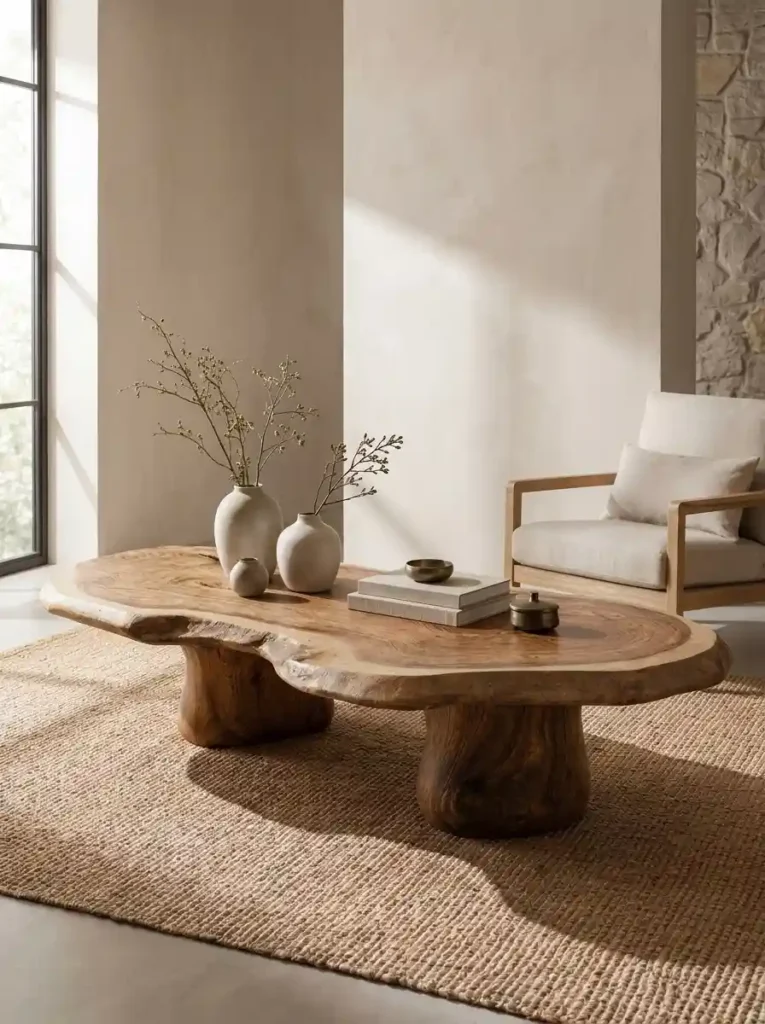
Choose wooden pieces that show their character a coffee table with visible knots, a bench with a few marks, a shelf that hasn’t been polished to a mirror shine. Untreated or lightly oiled wood feels warm to the touch and adds a quiet, grounded presence to any room.
If you’re buying new, look for solid wood with natural variation instead of perfectly uniform veneers. Every small flaw is a reminder that the piece was once part of a living tree.
2. Washed Linen That Looks Gently Wrinkled
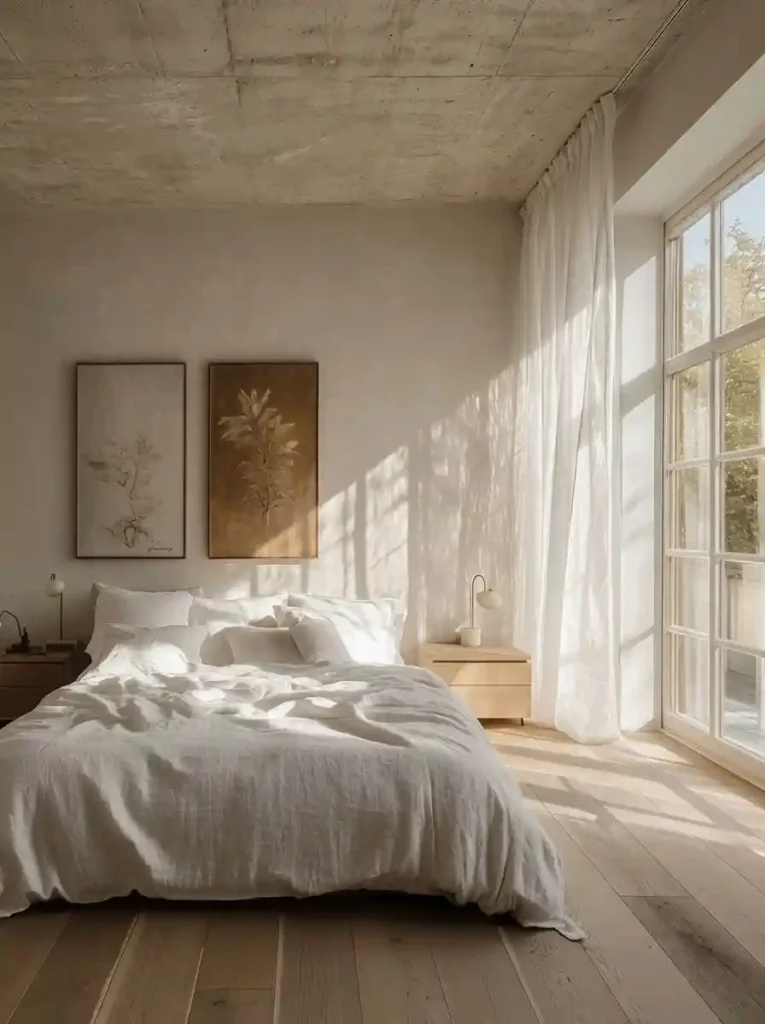
Linen is the quiet star of wabi sabi home decor. Curtains, tablecloths, cushion covers and bedding in washed linen drape softly and wrinkle in a relaxed way, which is exactly the look you want. Don’t bother ironing it flat.
Stick to natural shades like oatmeal, sand, stone and soft white. The more you wash it, the softer it gets and for more ways to layer soft textures through your home, take a look at our guide on how to make your home cozy.
3. Handmade Ceramics With Uneven Edges
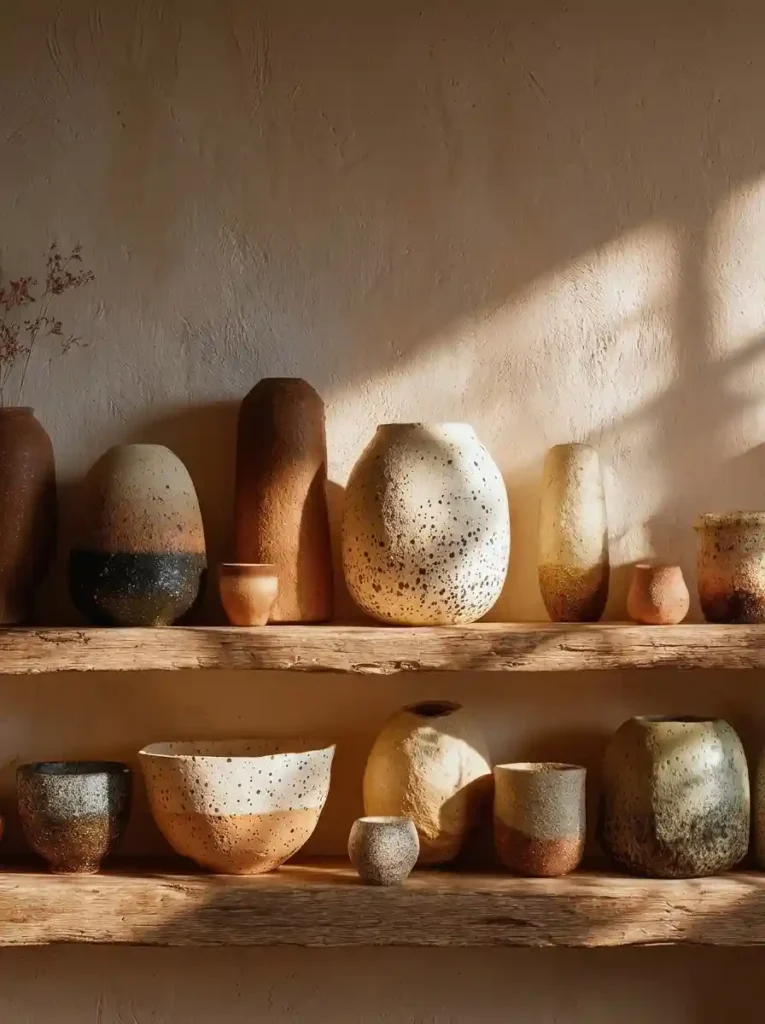
A hand-thrown bowl or vase brings something no factory piece can: the trace of the person who made it. Slightly irregular rims, drips in the glaze and soft color variations are not mistakes here, they’re the whole point.
You don’t need many. Three or four handmade pieces displayed together on a shelf or table add personality and warmth and local markets and small studios are often the best places to find them.
4. Thrifted and Restored Pieces With a Past
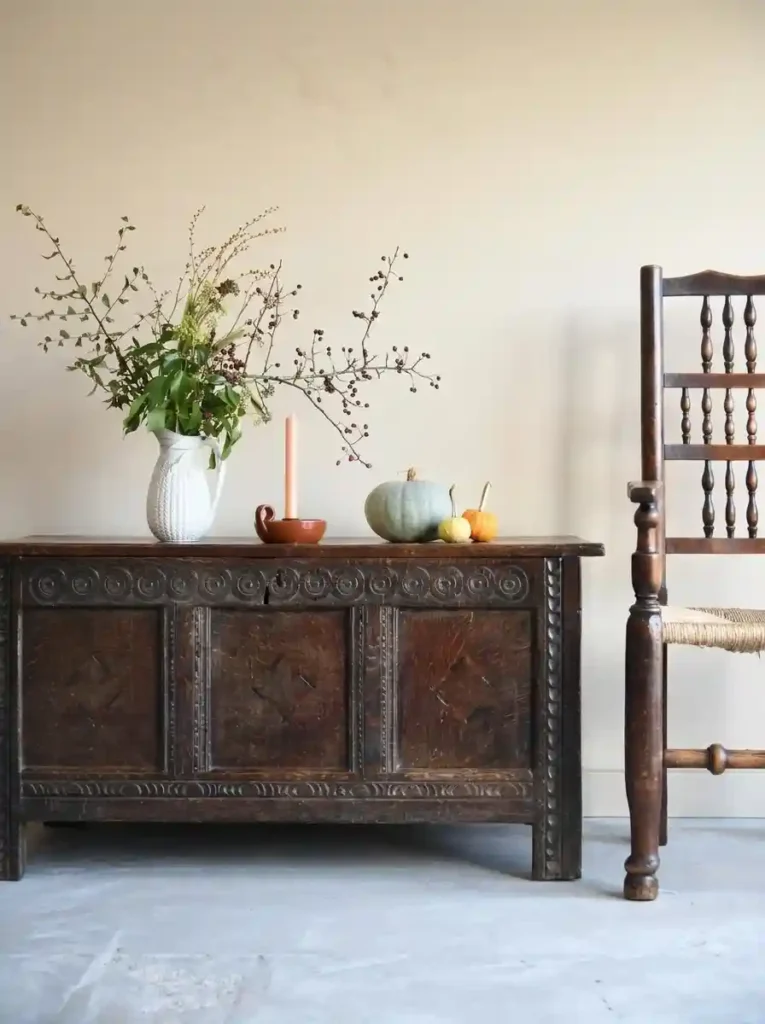
An old chair with a chipped finish or a worn wooden chest has a history no new furniture can match. Wabi sabi home decor loves these pieces, because every scratch tells you the item has been loved and used.
Instead of repainting everything, clean it, tighten the screws and let the marks stay. If something breaks, repairing it in a visible way, the way the Japanese art of kintsugi mends pottery with gold, can make it even more special than before.
A Wabi Sabi Color Palette for a Calm Home
Color in this style is quiet. Nothing shouts, so your eyes and your mind have room to rest.
5. An Earthy Neutral Color Palette
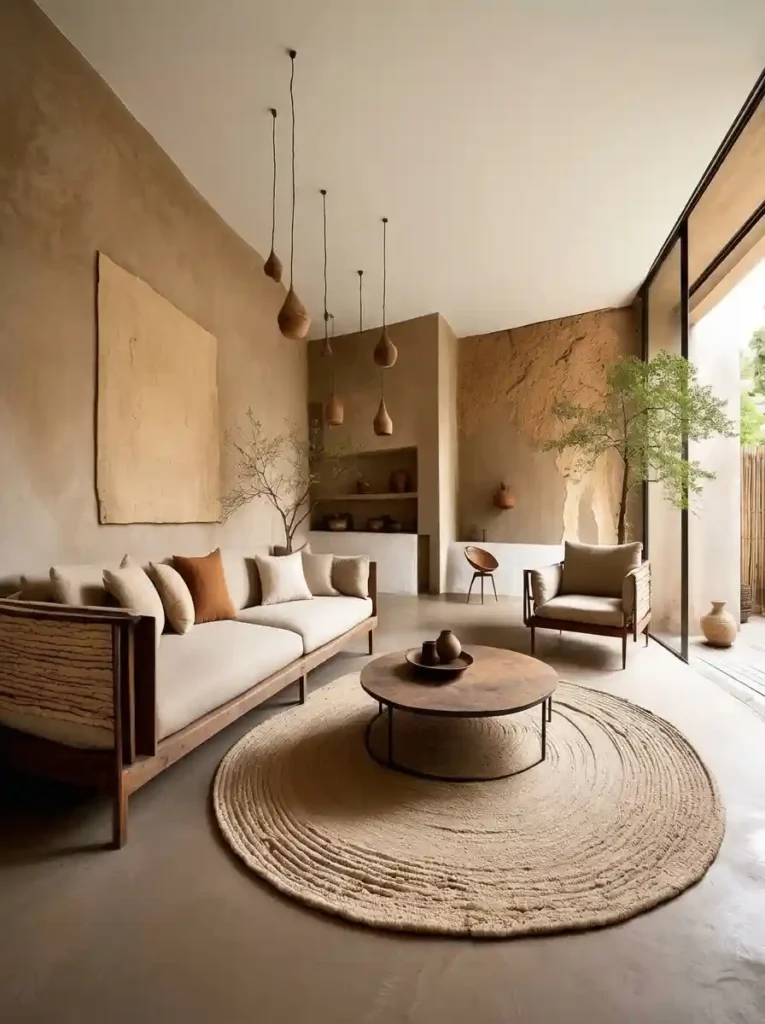
Build your color palette around shades borrowed from nature: beige, sand, stone gray, soft ochre, warm brown and muted clay. These tones feel peaceful and they blend naturally with wood, linen and ceramic.
If you want a little more color, bring in a faded sage green or a washed out blue for a hint of nature, like moss or a quiet sky. Keep everything soft and slightly dusty, never bright or glossy.
6. Soft Contrast to Keep the Room Alive
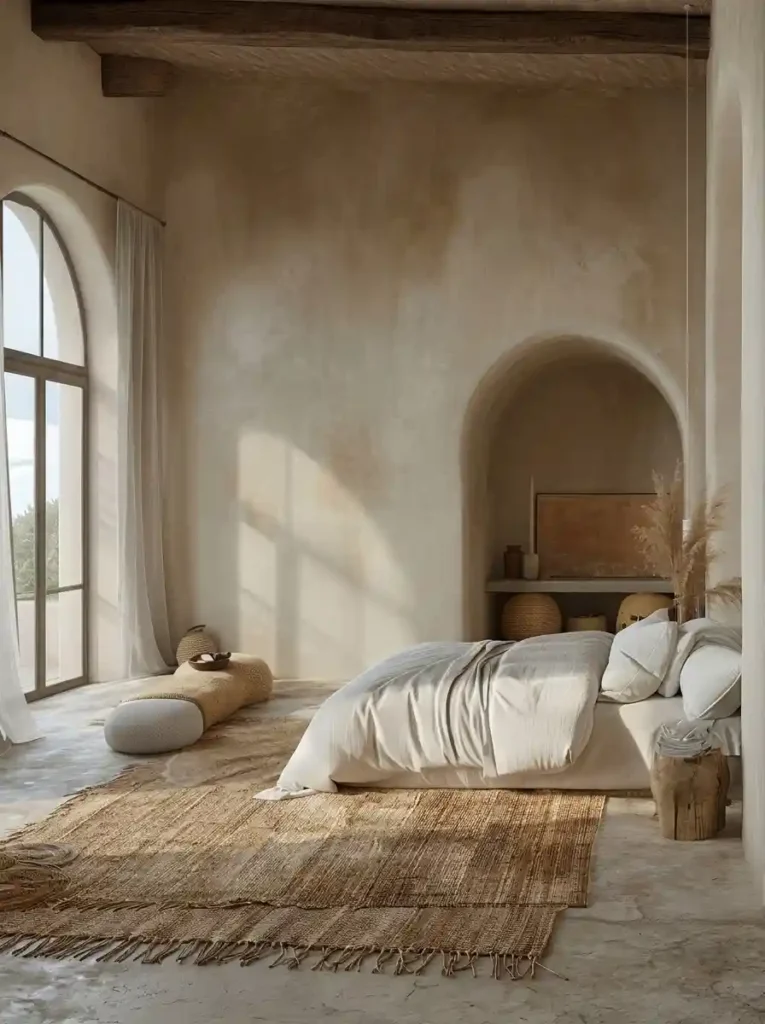
A room with only one tone can feel flat. Add gentle contrast by placing a dark ceramic piece against a pale linen throw or a warm wooden table against a light wall. The difference should be subtle, never harsh.
Think of it as shadows in a quiet painting. A single deep brown vase or a charcoal bowl can anchor the whole scene without disturbing the calm.
Wabi Sabi Wall Decor Ideas
Walls take up more of the room than anything else, so they set the tone. Here’s how to keep them quiet, textured and personal.
7. Limewash or Textured Plaster Walls
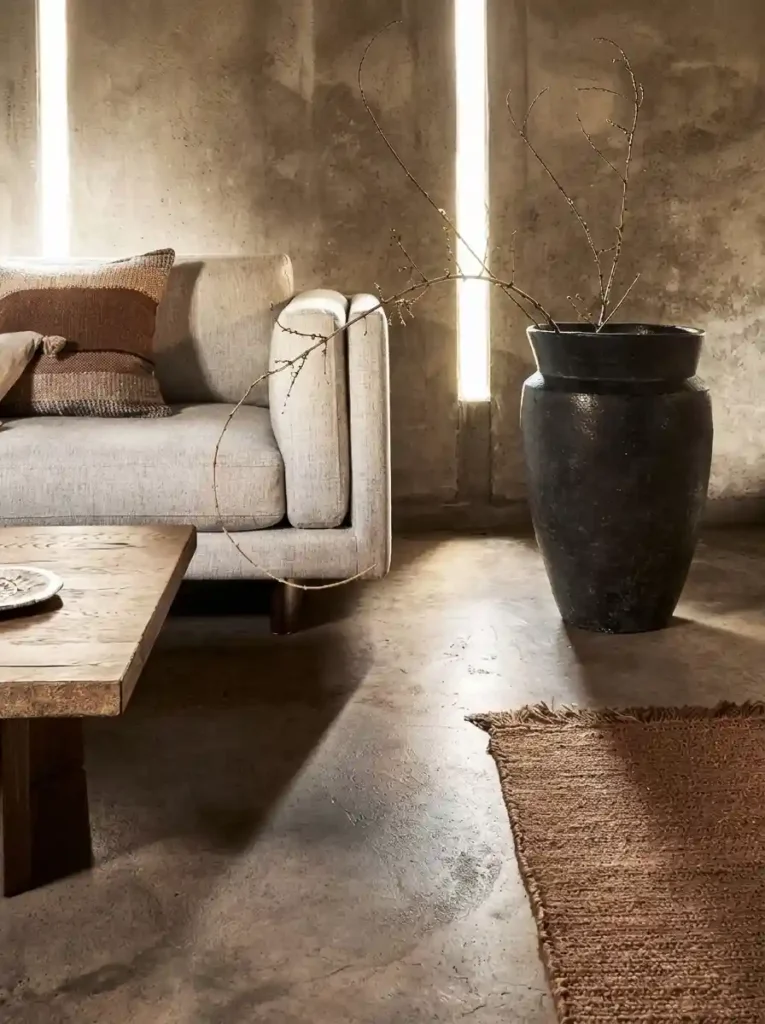
A limewash or plaster finish gives walls a soft, cloudy depth that flat paint can’t match. The slight variations in tone catch the light differently through the day and give a room a calm, handmade look.
If you rent, try a textured paint effect or a large plaster style panel behind a bench or a bed. Choose warm whites, soft clay or muted sage so the walls feel like a gentle backdrop.
8. Handmade-Looking Wall Art

Skip the glossy prints and choose wall decor with texture: an abstract canvas with thick, muted brushstrokes, a pressed botanical in a simple frame or a handwoven wall hanging. These pieces feel personal and they look better the closer you get.
Hang one larger piece or a small cluster of two or three and leave plenty of empty wall around them. The empty space is part of the design.
9. A Floating Wooden Shelf With Only a Few Objects
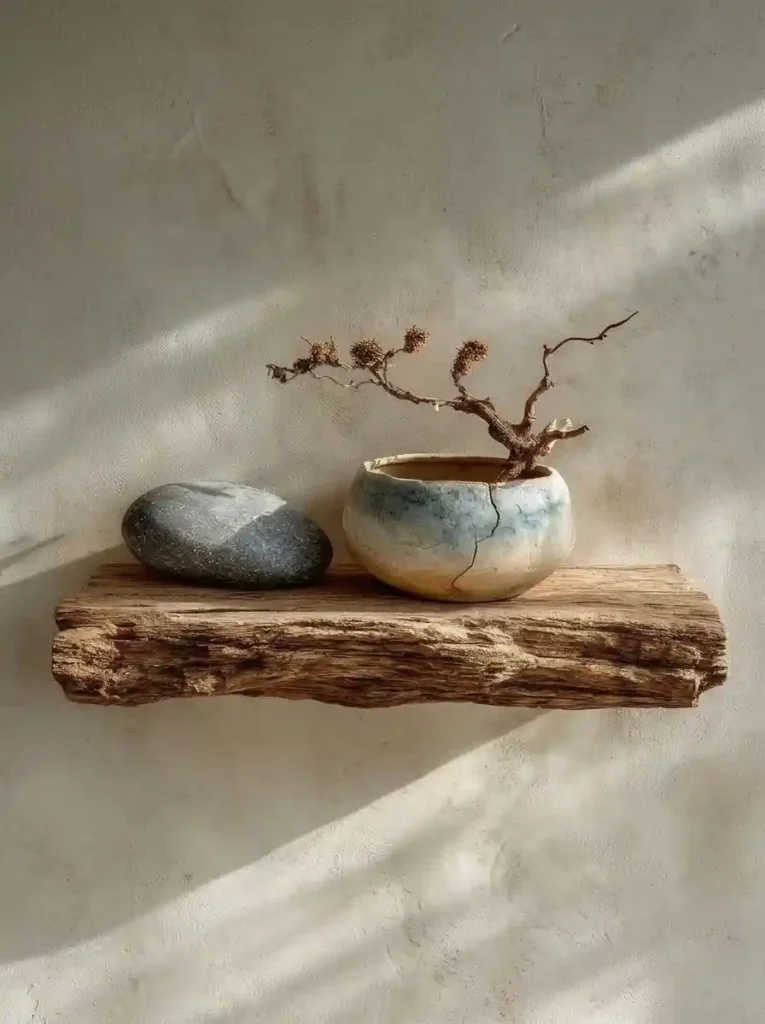
A simple floating shelf can be a small gallery wall. Place just three things on it: a handmade bowl, a stone and a small branch in a vase. Leave the rest of the shelf empty.
That space between the objects is what makes it feel peaceful. Change the items every season or whenever you feel like it, and the wall always looks fresh without any effort.
Wabi Sabi Home Decor Room by Room
Once you’ve got the basics, here’s how to bring the same calm feeling into the rooms you use every day.
10. A Wabi Sabi Living Room That Invites You to Sit
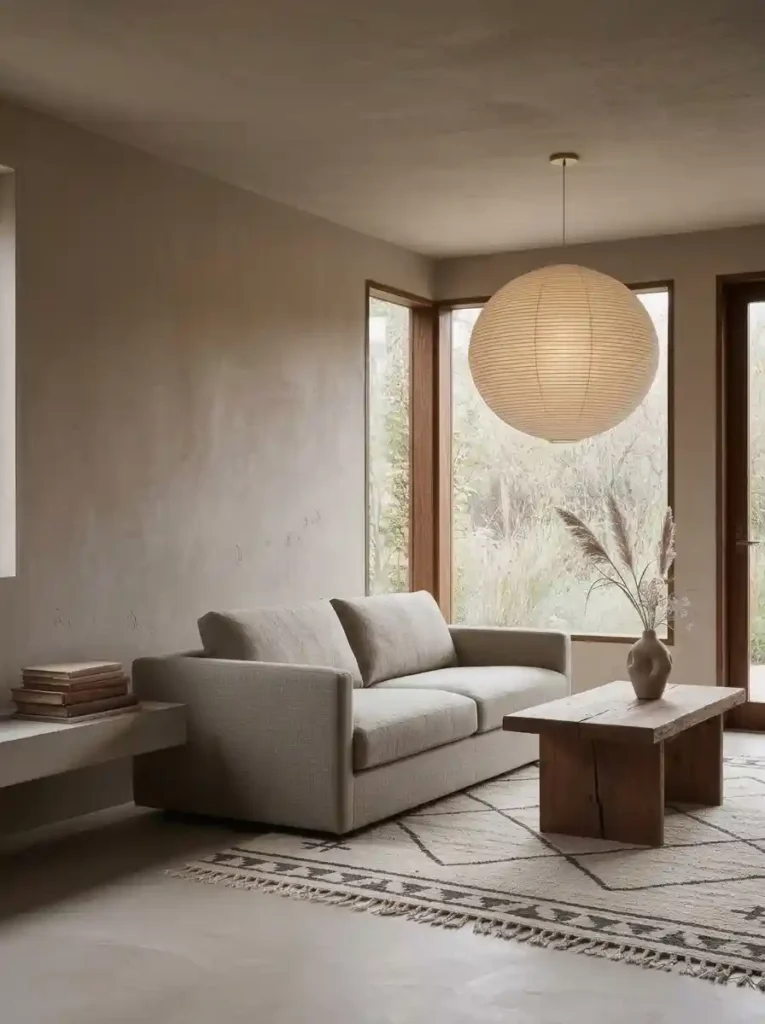
Start with a comfortable sofa in linen or cotton a coffee table in raw wood and a handwoven rug. Add one lamp with a soft paper or rattan shade for a gentle glow in the evening.
Keep surfaces mostly clear, with a couple of meaningful objects instead of many small ones. The goal is a living room where you can put your feet up without worrying about anything being perfect.
11. A Wabi Sabi Bedroom Made for Rest

In the bedroom, choose natural cotton or linen bedding in soft neutrals, a simple wooden bed frame and a paper lamp that gives a dim, restful light. Keep the nightstand to just a lamp, a book and a small dish.
For more ideas on layering a peaceful sleeping space, you can browse our cozy bedroom ideas for adults and if your room is tiny, our small bedroom ideas show how to keep the calm without the clutter.
12. A Wabi Sabi Kitchen That Feels Honest and Warm

Choose open wooden shelves, a wooden chopping board left on the counter and everyday dishes in handmade stoneware with slight variations. Wooden spoons in a ceramic jar and a bowl of seasonal fruit complete the picture.
Keep the counters mostly open and display only what you really use. A kitchen like this is beautiful because it’s working, not because it’s staged.
13. A Wabi Sabi Bathroom Like a Quiet Spa
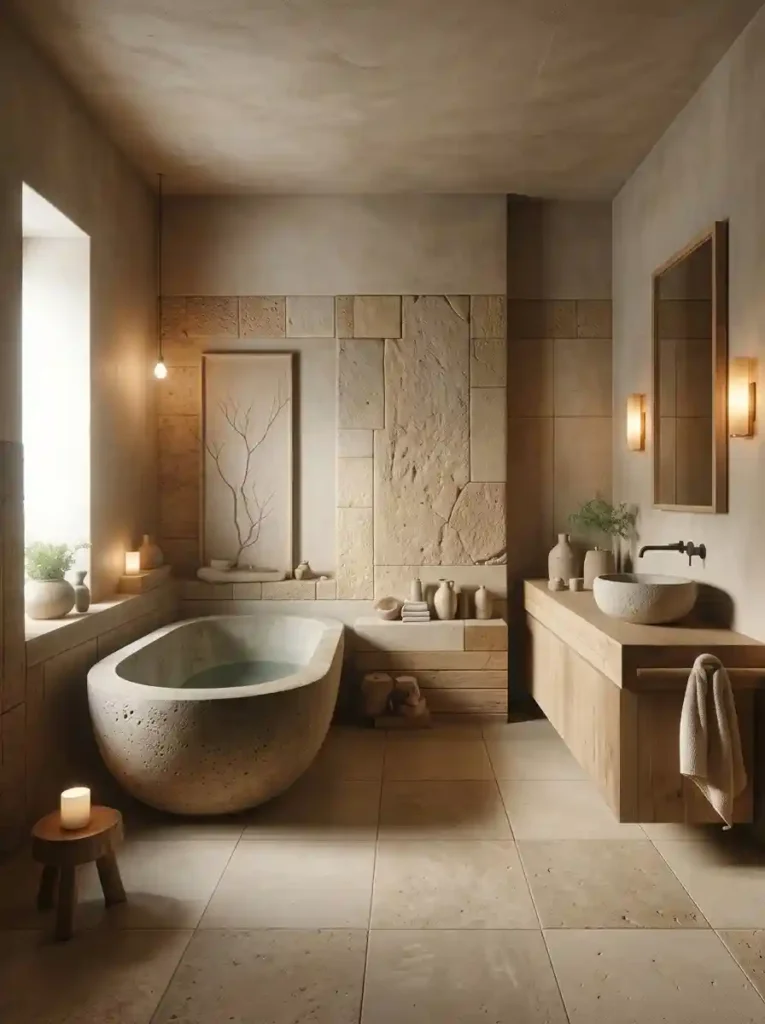
Use natural materials like stone, wood and cotton: a stone soap dish, a wooden stool next to the tub and thick cotton towels in soft neutrals. A handmade ceramic basin with slightly uneven edges can be the star of the room.
Keep things simple with one small candle and a single branch in a vase. The calm, unhurried look turns a daily routine into a small ritual.
A Last Calm Detail
14. A Quiet Corner With Stones, Branches and Soft Light
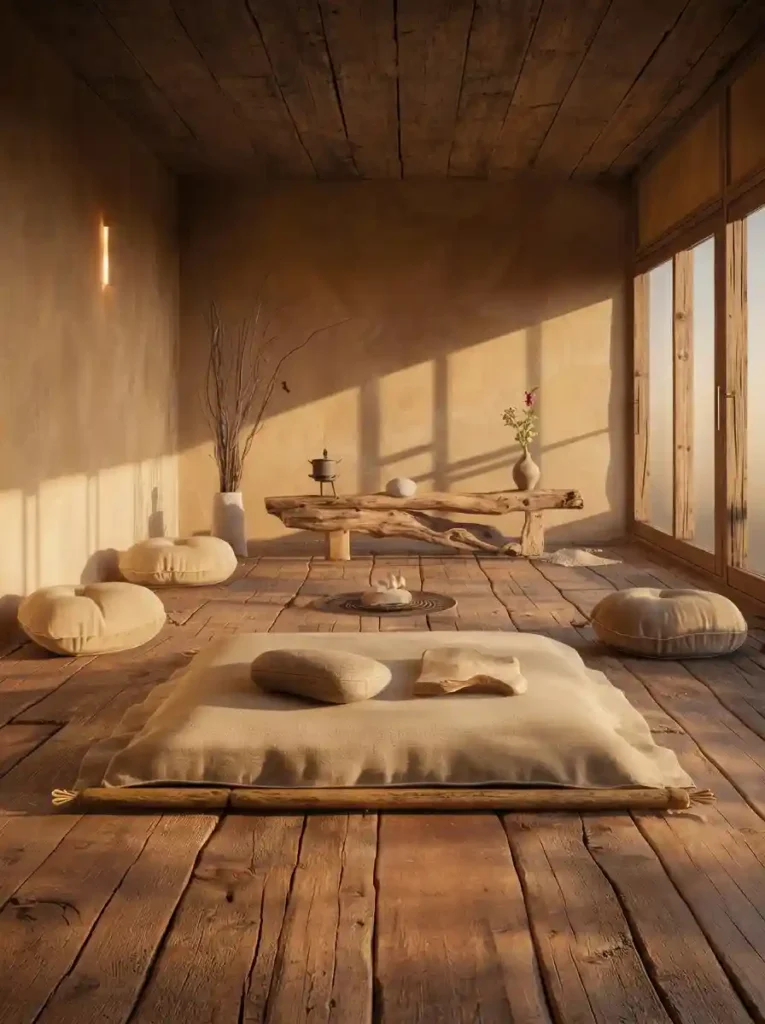
Every home needs one spot where you can just be. Set a floor cushion or a low stool in a corner, add a ceramic bowl with a few smooth stones and a single branch in a vase. Pair it with a soft lamp or a candle for gentle light.
It doesn’t need to be a full meditation room. It’s simply a small reminder to slow down, breathe and enjoy a quiet moment with a cup of tea.
Common Wabi Sabi Decor Mistakes to Avoid
Because the style looks so effortless, it’s easy to go slightly off track. Here are three traps to watch for.
Confusing Imperfect With Neglected
Wabi sabi doesn’t mean leaving things dirty, broken or messy. A chipped bowl that’s clean and used every day is lovely, but a pile of clutter is just clutter. Keep everything cared for, even if it shows its age.
Making Everything Match
A perfectly matched set takes away the soul of the style. Mix wood tones, different shades of the same neutral and ceramics that don’t quite match, so the room feels collected over time instead of bought in one go.
Choosing Beauty Over Function
Every piece should earn its place. If a decorative object gets in the way or isn’t used, it doesn’t belong in a wabi sabi home. Keep what is beautiful and useful and let go of the rest.
Frequently Asked Questions About Wabi Sabi Decor
What is wabi sabi decor?
It’s an interior design approach based on a Japanese way of finding beauty in imperfection and simplicity. In practice, it means natural materials, handmade objects, muted colors and calm, uncluttered rooms.
How do I start wabi sabi decor on a budget?
Begin by decluttering and using what you already own. Then add a few thrifted or secondhand pieces, linen textiles and one or two handmade ceramics and let the room grow slowly over time.
What colors are used in wabi sabi style?
Earthy neutrals like beige, sand, stone gray, clay and warm brown, with occasional touches of faded sage or soft blue. A calm color palette keeps the space peaceful and timeless.
Is wabi sabi the same as Japandi?
They’re related, but not identical. Japandi blends Japanese and Scandinavian design with clean lines and light wood, while wabi sabi leans more toward rough textures, age and handmade imperfection.
Does wabi sabi mean I can’t have any decor?
Not at all. It simply asks you to choose fewer, more meaningful pieces and give each one space to be noticed.
Final Thoughts
Wabi sabi decor isn’t about following strict rules or buying a whole new set of furniture. It’s about looking at your home with kinder eyes and choosing materials, colors and objects that feel honest and calm. A cracked bowl a wrinkled throw and a bare wall can be just as beautiful as anything fancy.
Start with one idea from this list this week, maybe a handmade ceramic piece or a linen curtain, and notice how your home begins to feel. If you’d like to keep building that sense of warmth and calm, our guide on how to make your home cozy is a great next step and don’t forget to pin your favorites for later.